


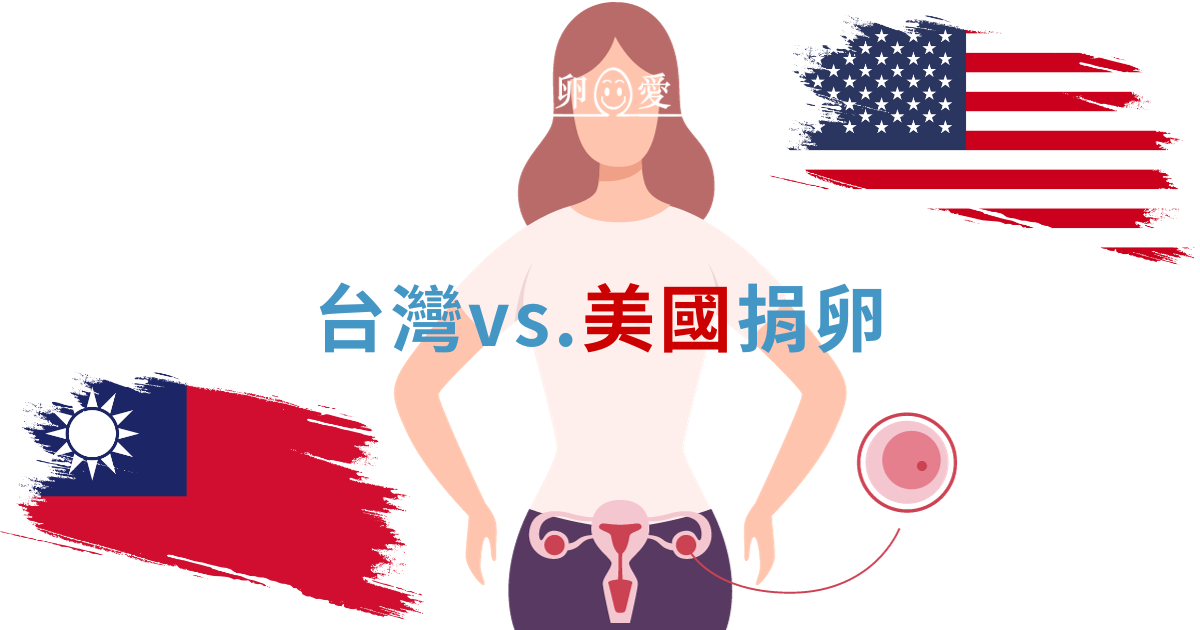
Egg Donation in Taiwan vs. the USA: Requirements, Compensation, and What to Know
If you are considering egg donation, whether as an intended parent or a potential donor, understanding the differences between Taiwan and the United States is essential. The two countries differ in their legal frameworks, donor requirements, compensation, matching process, and medical standards. This guide compares egg donation in Taiwan and the USA side by side, so you can make an informed decision about where and how to proceed.
Table of Contents
According to the World Health Organization’s 2023 report, one in six adults worldwide has experienced infertility at least once. Taiwan, notably, has one of the lowest fertility rates in the world. Across all nations and ethnicities, the demand for assisted reproductive technologies (ART)—including IVF, egg donation, sperm donation, and surrogacy—continues to grow, helping couples and individuals achieve their dream of having a baby.
Donors can receive up to NT$99,000 as compensation for discomfort and medication costs.
The donation process is anonymous, meaning the recipient parents will not see or know the donor’s facial features or identity. Matching is conducted solely based on medical compatibility (e.g., blood type, genetic screening).
Donors in Taiwan are limited to donating once in their lifetime.
In Taiwan, the maximum number of egg donations is 1; in the United States, the maximum number of egg donations is 6.
Therefore, if egg donors achieve ideal results, they can donate fresh frozen eggs across borders to prospective parents in other countries, thus helping infertile families worldwide.
The United States is recognized as the world leader in reproductive medicine, offering the highest IVF success rates and the most comprehensive legal protection for both donors and intended parents.
Safety and Risk: How Egg Donation Compares in Taiwan and the USA
The United States boasts the highest level of experience and safety in ovulation induction for egg donation globally. Doctors there are generally highly experienced in egg retrieval, ensuring maximum safety. The process is legally guaranteed and covered by medical insurance, ensuring that any discomfort experienced by the girl can be treated with medication prescribed by the doctor. Girls traveling to the US to donate eggs are required to return for checkups every two to three days to monitor follicle growth and minimize discomfort from ovarian stimulation. Furthermore, a maximum of six donations are permitted in the US; if a US visa is valid for 90 days, two donations are allowed.
Egg donation and egg freezing follow the same process, requiring medication to stimulate the ovaries to produce larger, healthier follicles. However, the risks of egg donation in the US, like in Taiwan, depend on the doctor’s control of the medication and the donor’s response to ovarian stimulation. Some reactions are very noticeable, while others are asymptomatic. The most common side effects of egg donation are abdominal bloating, ascites, dizziness, and nausea. However, these side effects usually improve significantly after drinking plenty of water the next day, and ovarian stimulation syndrome is rare.
The U.S. has over 20,000 donation cycles annually, conducted by experienced fertility specialists. Donors undergo thorough testing (hormonal, genetic, infectious disease screening) and are closely monitored with ultrasound and bloodwork every few days. The main “risk” for Taiwanese donors is travel-related—being away from home for around two weeks. However, many find the experience rewarding, especially with reputable agencies like Generation Family Network, which provide full support and assistance during the entire process.
However, egg donation in Taiwan is relatively safe because patients can return for a check-up if they experience any discomfort. The side effects of egg donation depend on the dosage prescribed by the Taiwanese doctor. While the dosage is generally milder, there are still cases where fewer than 10 follicles are found, resulting in a 50% reduction in nutritional compensation. This is quite unreliable for egg donors, as they cannot see the number of follicles themselves, making their efforts futile. Therefore, when choosing an egg donation agency, it’s crucial to clearly communicate the overall trust level and nutritional compensation details beforehand to avoid wasting time and effort on tests only to not receive the expected compensation.

What are the differences in the eligibility requirements for egg donation between the United States and Taiwan?
| What are the differences between egg donation in the | US and in | Taiwan? |
| Age: | 20-30 years old | ,18-40 years old |
| Height | :at least 158 cm, | No restriction |
| Education: | High school, preferably college or above | ,No restriction |
| Medical Examination Fees: | Usually paid upfront by the donor and reimbursed after egg retrieval, | No payment required but donors must sign consent form. if they withdraw midway, they must compensate for examination cost. |
| Genetic & Health Screening: | Genetic and chromosomal test results must be normal | ,Donors must not carry any major hereditary diseases |
| Ovarian & Hormonal Indicators |
|
|

How Many Times Can You Donate Eggs in Taiwan and the USA?
In the US, you can donate six times, while in Taiwan, you can only donate once. Other countries have different regulations based on their reproductive laws.

Comparison of Matching Time between Egg Donation in the US and Egg Donation in Taiwan
United States | Taiwan | |
Matching Wait Time | fter arriving in the U.S., the waiting period is usually 1 week to 1 month. | The waiting period is at least 1 month, and may take up to 6 months or longer. |
Matching Criteria | Donors provide anonymous childhood photos, clear facial photos, height, blood type, and previous donation history for intended parents to choose from. | octors arrange matches based on medical compatibility and blood type. Intended parents cannot access donor information or contact details. |
Taiwan’s process is blind donation — doctors select suitable donors based on medical conditions and ovarian health. Intended parents cannot choose donors. Once matched, testing begins; the entire process can take 6 months or more.
U.S. egg donation allows intended parents to view donor photos and choose based on resemblance, education, and health background. Donors with better conditions (e.g., taller height, higher education, attractive appearance) are often matched within 1–2 weeks.
Egg Donor Compensation: Taiwan vs. United States

United States | Taiwan | |
Compensation: | Minimum USD $7,000 to $25,000 | Maximum TWD $99,000 |
Meal Allowance: | USD $50 per day | Not provided |
Medical Examination Fees: | You must pay for the examination at the designated partner hospital in advance. Free medical examinations | Inspection is free |
Airfare: | Can be paid upfront and reimbursed after the donation process. | Not provided; no commuting reimbursement |
Accommodation | Arranged by U.S. medical facility | Donors stay at home |
Compared to egg donation in Taiwan, who is more suitable for egg donation in the United States?

If you are attractive, tall, highly educated, and enjoy traveling abroad, then flying from Taiwan to the US to donate eggs is a great option. Donating eggs in the US requires a stay of at least 14 days, and you need to be able to independently buy your own meals, call transportation for appointments, and travel independently within the US. The better your egg donation criteria, the higher the nutritional allowance you can negotiate.
Why Choose US-Based Egg Donation Through Generation Family Network?
For overseas or U.S. egg donation matching, Generation Family Network is the top choice. LuanAi provides 24/7 dedicated online customer support and collaborates with multiple IVF centers in the United States, Thailand, and China. The entire donation process and medical checks are fully transparent, and no matching fees are charged to donors. Additionally, LuanAi offers free outdoor photo sessions and retouching services for applicants in northern Taiwan, along with access to a professional medical consultation team for ongoing support.