



Egg donation is a deeply meaningful decision — it not only helps families who cannot conceive naturally fulfill their dream of becoming parents but also brings emotional fulfillment to the donor herself. However, as awareness about egg donation grows, many people begin to wonder about the potential health effects of the process — especially the question most frequently asked:
“Will donating eggs cause infertility?”
This article focuses on the most common concerns related to egg donation, particularly its impact on fertility, aiming to dispel myths, clarify misconceptions, and provide accurate medical insights based on real clinical data.
Table of Contents
Differences Between Egg Donation in the U.S. and Taiwan: Requirements and Compensation
The United States is globally recognized for its advanced assisted reproductive technology (ART), legal egg donation and surrogacy framework, and high success rates in IVF treatments.
U.S. law fully protects both donors and intended parents, ensuring ethical practices and contractual transparency.
In the U.S., egg donors are usually required to provide childhood photos and unaltered facial photos so that intended parents can evaluate genetic resemblance — such as eye shape, hair texture, skin tone, facial symmetry, and other inherited traits.
Most prospective parents hope to find a suitable egg donor to help them have children. Infertile couples or LGBT couples around the world can legally travel to the United States to find egg donors, undergo IVF, or use surrogacy. However, there are also donors from various races around the world.Although Taiwan has a high IVF success rate, By contrast, Taiwan’s Ministry of Health and Welfare regulations prohibit the disclosure of donor photos and maintain a strictly anonymous donation system, meaning donors and recipients do not know each other’s identities.
U.S. Egg Donor Eligibility and Compensation
Compared to Taiwan, U.S. egg donation programs are more flexible and open to donors of all ethnic backgrounds.
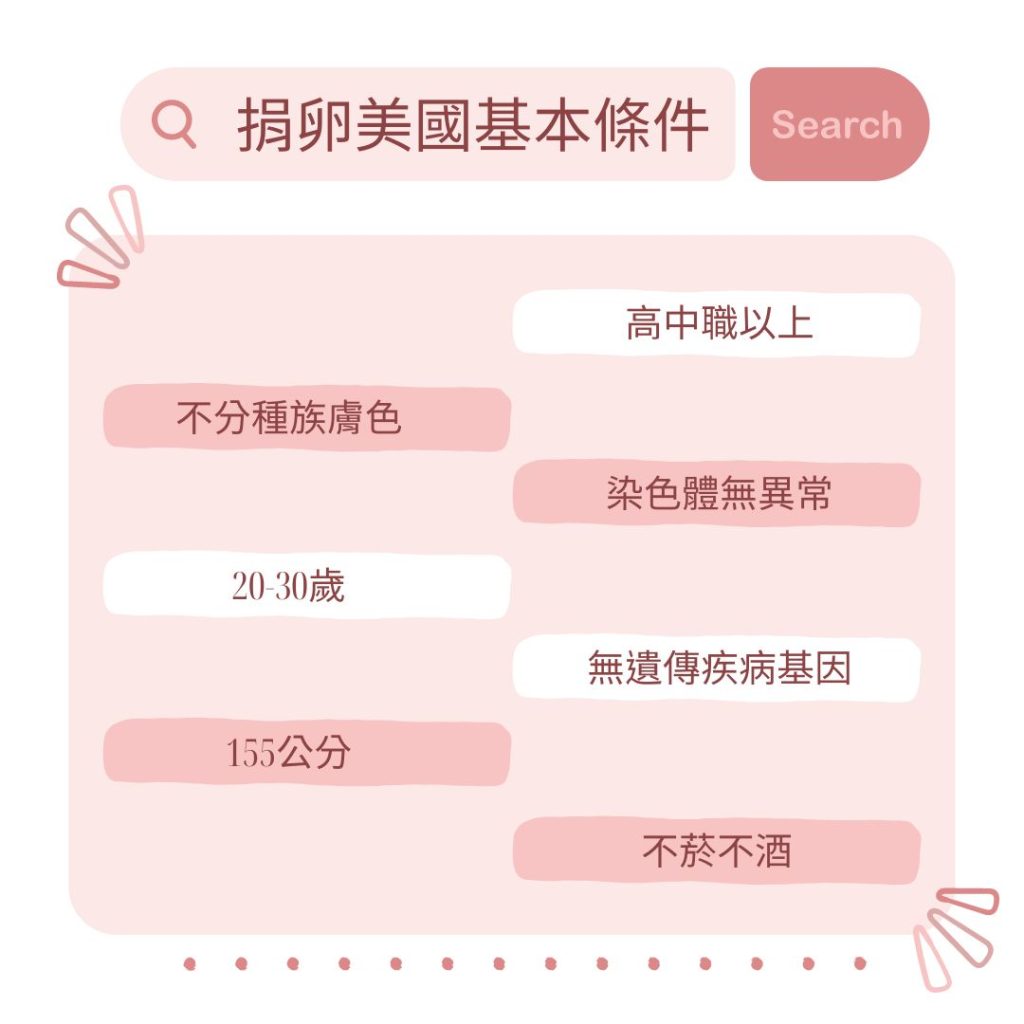
Typical requirements include:
Female, aged 20–30
Minimum height 155 cm (5’1”)
High school education or above
Normal chromosomes and no genetic disorders
Non-smoker, non-drinker
Able to travel to the U.S. for approximately 14–16 days for the donation cycle
Compensation (commonly referred to as “donor honorarium” or “allowance”) in the U.S. generally ranges from USD $6,000 to $30,000, depending on the donor’s profile, education, medical history, and previous successful donations.
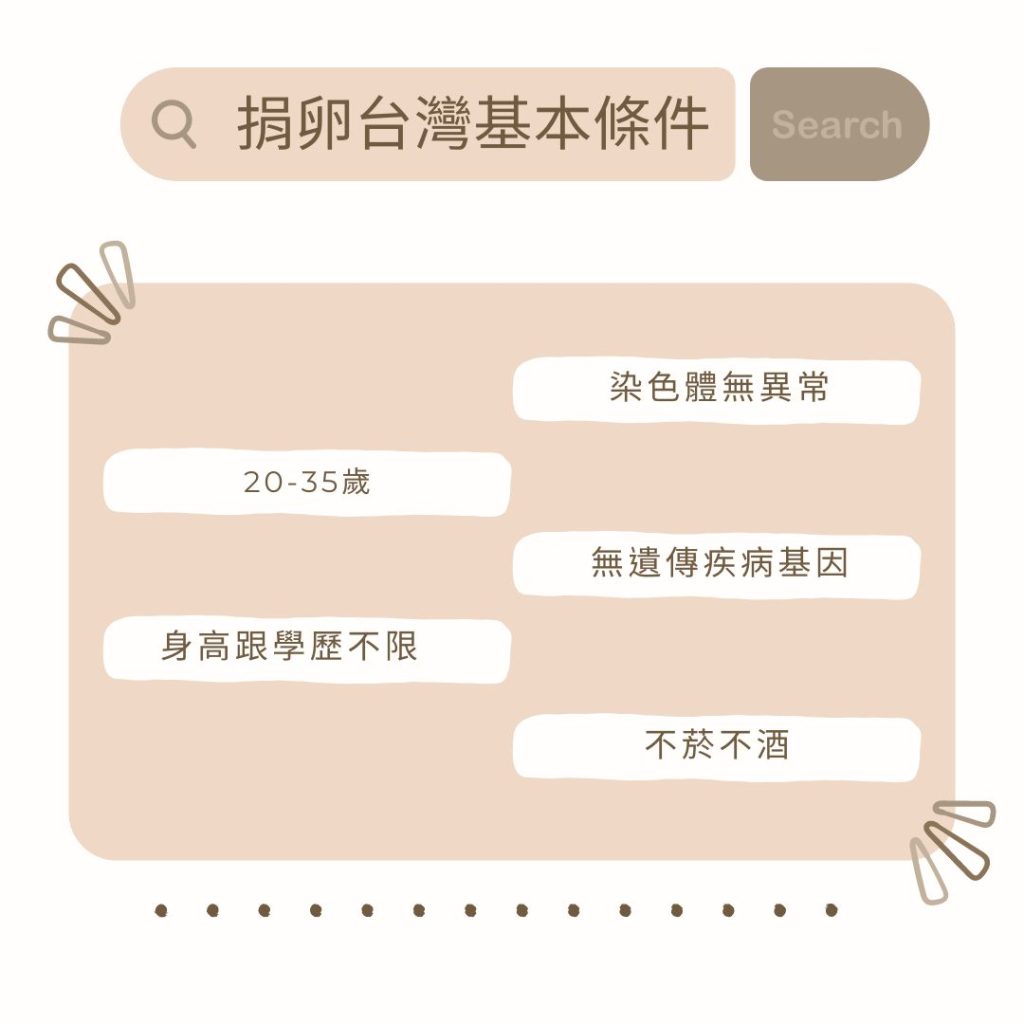
Taiwan Egg Donation Basic Requirements
The basic qualifications for egg donors include:
Age: 20–35 years old
Height & Education: No specific restrictions
Health Requirements:Normal chromosome profile (no abnormalities)
No hereditary or genetic diseases
Non-smoker and non-drinker
Compensation: The nutritional allowance (also called “thank-you compensation”) is capped at NTD 99,000 per donation cycle, as regulated by Taiwan’s Ministry of Health and Welfare.
Egg Donation Myths — Does Donating Eggs Cause Infertility? Is Having Lighter Periods Normal?
Does Egg Donation Cause Infertility?
No — egg donation does not cause infertility.
During a normal menstrual cycle, a woman’s body naturally releases one mature egg, while the rest of the developing eggs are reabsorbed by the body and never used.
In an egg donation cycle, fertility medication (stimulation injections) simply helps more of those naturally available eggs mature at once, so that several can be retrieved in a single cycle.
These eggs are not “taken away” from your future supply — they would have otherwise been discarded by the body. Therefore, donating eggs does not reduce your ovarian reserve or harm your long-term fertility potential.

It is possible to experience temporary menstrual irregularities after egg donation.
During the donation process, hormonal stimulation medications are used to help multiple eggs mature. After the egg retrieval, your body needs time to readjust its hormone levels.
As a result, your menstrual cycle may become irregular or lighter for one to two months, but this is a temporary condition. Most donors find that their periods return to normal within one or two cycles after the procedure.
Egg Donation Eligibility — Why Body Weight Matters
Does Egg Donation Have Weight Restrictions?
Yes — but it is based on Body Mass Index (BMI) rather than body weight alone.
Since every woman’s height differs, BMI is used to assess whether an individual’s weight is within a healthy range for safe medication dosing and effective ovarian stimulation.
Overweight Donors
The recommended BMI range for egg donors is 19–25. If BMI is above 25, the body’s response to fertility medications may become unpredictable.
Excess body fat can affect hormone absorption and ovarian response, potentially causing ovarian swelling, discomfort, or poor follicle development, which may make egg retrieval less successful.
Underweight Donors
If BMI is below 19, the body may lack sufficient nutrients and hormone balance for healthy follicle growth.
In such cases, eggs may fail to mature properly or may be empty follicles, reducing the chances of successful fertilization.
In summary, maintaining a healthy BMI between 19–25 helps ensure the body responds optimally to medication, supports egg quality, and keeps the egg donation process both safe and effective.
Being overweight or underweight needs to be evaluated based on the overall BMI value.
Who Is Not Suitable for Egg Donation? Why Is PCOS Unsuitable for Donors?
People Who Are Not Suitable for Egg Donation
Who should avoid donating eggs?
Women who often stay up late, have irregular menstrual cycles, or are overweight may not be suitable candidates for egg donation.

Polycystic Ovary Syndrome (PCOS) Patients
Women with Polycystic Ovary Syndrome (PCOS) already have a higher risk of developing Ovarian Hyperstimulation Syndrome (OHSS) during egg donation.
Because their ovaries are more sensitive to stimulation medications, they are not recommended to participate in egg donation.
How Many Times Can You Donate Eggs in the U.S.? What Costs Are Involved?
In the United States, a donor can donate up to six times in total.
For those planning to donate in the U.S., the only cost to cover is the initial self-paid medical examination in Taiwan, which is about NT$16,000.
These test reports belong to you and can be kept for personal reference. Regardless of whether you pass the screening or not, EggLove will reimburse these costs!
Egg Donation Support — 【U.S. Global Egg Donation】 24/7 LINE Consultation
EggLove partners with over 24 reproductive centers worldwide, allowing global matching opportunities.
You can fulfill your dream of traveling abroad for free while earning compensation through egg donation.
Add EggLove’s official LINE account now and start your journey to becoming an international donor!