
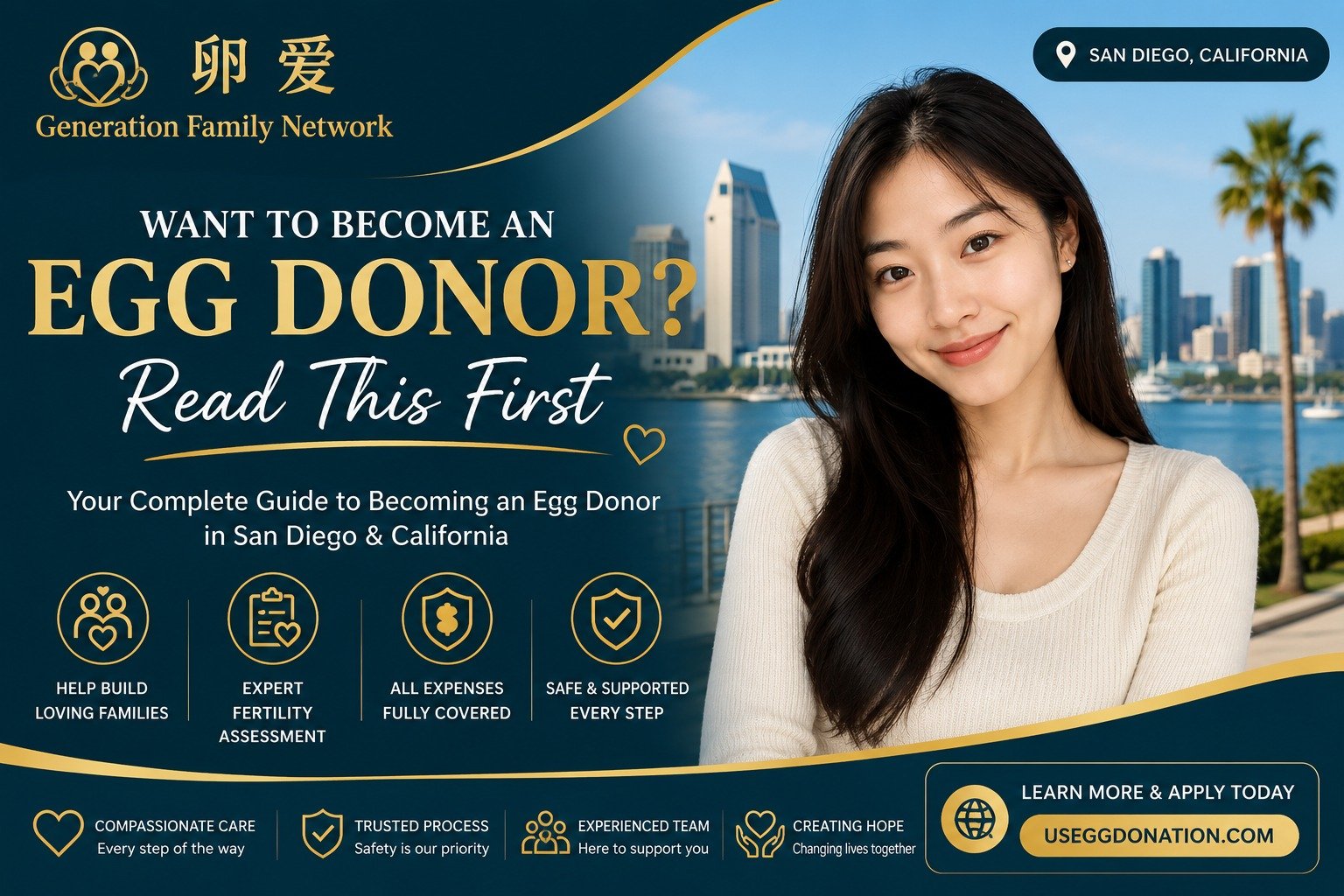
The decision to become an egg donor is both meaningful and personal. For many women, egg donation is an opportunity to help individuals and families achieve their dream of parenthood. For others, it is also a chance to receive financial compensation while making a life-changing impact.
But before you apply, there are important things you should know.
Egg donation involves medical screening, hormone supportive medication, time commitment, and thoughtful decision-making. Understanding the process beforehand can help you decide whether becoming an egg donor is the right choice for you.
If you’re considering becoming an egg donor in San Diego or anywhere in California, this guide covers everything you need to know — from eligibility requirements and compensation to risks, emotional considerations, and frequently asked questions.
Whether you’re just curious or ready to begin your application, read this first.
What Is Egg Donation?
Egg donation is a medical process in which a healthy woman donates her eggs (oocytes) to help another individual or couple conceive a child.
People who seek donor eggs may include:
- Couples experiencing infertility
- Women with diminished ovarian reserve, pursuing pregnancy later in life, and premature ovarian insufficiency (POI)
- LGBTQIA+ Individuals and Couples
- Single intended parents
- Individuals with genetic or hereditary concerns
- Cancer survivors affected by fertility treatments
- Single Intended Parents
- Families seeking alternative paths to parenthood
During the process, a donor undergoes hormone stimulation to encourage multiple eggs to mature. Those eggs are then retrieved during a minor minimally invasive medical procedure and used in fertility treatment, typically in vitro fertilization (IVF).
In most cases, the intended parents receive the donated eggs, which are fertilized and transferred to create a pregnancy.
Egg donation has helped thousands of families across the United States — especially in fertility-focused regions such as California and San Diego, where reproductive medicine programs continue to grow.
Who Can Become an Egg Donor?
Many women wonder:
“Am I eligible to become an egg donor?”
While requirements vary slightly between agencies and fertility clinics, egg donors are generally healthy young women who meet specific medical and lifestyle criteria.
You may be a good candidate if you are:
- Healthy women of reproductive age (typically 21–32, depending on clinic guidelines)
- Physically healthy (with a healthy BMI and overall good physical health)
- Mentally and Emotionally stable
- Individuals willing to comply with medical protocols and fertility treatments
- A non-smoker
- Responsible and reliable
- Willing to commit to the donation timeline
- Women who meet legal and ethical requirements for donation in their region
Most agencies look for women who understand the importance of the process and are genuinely motivated to help others build families.
If you live in San Diego, Los Angeles, Orange County, or elsewhere in California, you may have access to leading fertility networks and donor opportunities through established programs like US Egg Donation.
Basic Eligibility Requirements
Before beginning the process, you’ll need to meet basic eligibility criteria.
While exact standards differ, common egg donor requirements in California include:
Age Requirements
Most programs prefer donors between 21 and 32 years old.
Age matters because younger donors typically produce healthier eggs with stronger fertility outcomes.
Good Physical Health
Potential donors should generally:
- Have a healthy BMI
- Be free from major medical conditions
- Maintain regular menstrual cycles
- Have no significant reproductive disorders
Healthy Lifestyle Habits
Programs often require donors to avoid:
- Smoking
- Recreational drug use
- Excessive alcohol consumption
Healthy lifestyle choices support safer medical outcomes and stronger egg quality.
Family Medical History
You’ll likely be asked detailed questions about:
- Genetic conditions
- Chronic illnesses
- Mental health history
- Inherited diseases within your family
Psychological Readiness
Egg donation isn’t only a physical process. Emotional preparedness matters too.
Programs want donors who understand:
- The medical process
- The emotional implications
- Confidentiality policies
- The long-term meaning of donation
The Egg Donation Process (Step-by-Step)
Understanding the process can reduce anxiety and help you prepare.
Here is a general overview of how egg donation in California typically works.
Step 1: Initial Application
The journey begins with an online application. You’ll provide information about:
- Medical history
- Education background
- Lifestyle habits
- Physical characteristics
- Family health information
Some agencies may also request photos or personal profile details.
Step 2: Preliminary Review
Once submitted, your application undergoes review. Programs assess:
- Eligibility qualifications
- Health history
- Program compatibility
If selected, you’ll move forward into screening.
Step 3: Medical & Psychological Screening
This is one of the most important phases of the process.
You’ll complete comprehensive evaluations designed to protect both you and intended parents.
(Screening is covered in detail below.)
Step 4: Matching With Intended Parents
After approval, you may be matched with intended parents. Some arrangements are:
- Anonymous
- Semi-anonymous
- Open or identity-release agreements
Matching preferences vary by agency and participant comfort levels.
Step 5: Cycle Preparation & Hormone Medications
Once matched, you’ll begin cycle synchronization and fertility medications. These medications stimulate your ovaries to produce multiple mature eggs. During this phase, you’ll attend monitoring appointments involving:
- Bloodwork
- Ultrasounds
- Hormone tracking
Monitoring ensures your body responds safely to medication.
Step 6: Egg Retrieval Procedure
The retrieval procedure is performed by fertility specialists. It is generally:
- Outpatient
- Minimally invasive
- Conducted under sedation
Using ultrasound guidance, physicians retrieve mature eggs from the ovaries. The procedure itself usually takes less than an hour.
Most donors recover within a short period, though mild symptoms can occur afterward.
Step 7: Recovery & Follow-Up
After retrieval, you’ll receive aftercare instructions and follow-up support. Temporary side effects may include:
- Mild cramping
- Fatigue
- Bloating
- Spotting
Most donors resume normal activities quickly.
Medical & Psychological Screening
Egg donation programs take screening very seriously — and for good reason.
Comprehensive evaluations help protect donor safety, medical outcomes, and ethical standards.
Medical Screening
Medical evaluations may include:
- Physical examination
- Blood testing
- Hormone evaluation
- Infectious disease testing
- Genetic carrier screening
- Reproductive health assessment
These tests help determine whether donation is medically appropriate.
Genetic Testing
Genetic screening is common in modern fertility care. Testing may assess risk for inherited conditions such as:
- Cystic fibrosis
- Sickle cell disease
- Tay-Sachs disease
- Other hereditary disorders
Programs seek to minimize preventable genetic risks.
Psychological Evaluation
Emotional readiness is equally important. Psychological screening may explore:
- Mental health history
- Emotional expectations
- Understanding of donation
- Stress management
- Motivation for participating
This evaluation ensures donors are informed and emotionally comfortable with the decision.
Legal Counseling
In many arrangements, legal agreements define important aspects of donation, including:
- Rights and responsibilities
- Compensation terms
- Confidentiality provisions
- Future communication expectations
Clear agreements help everyone move forward with confidence.
Risks & Side Effects You Should Know
Every medical procedure carries some level of risk.
Egg donation is generally considered safe when conducted under qualified medical supervision, but potential donors should understand possible side effects before proceeding.
Common Temporary Side Effects
Some donors experience mild, short-term symptoms related to fertility medication. These may include:
- Bloating
- Breast tenderness
- Mood fluctuations
- Injection site discomfort
- Headaches
- Fatigue
Many symptoms resolve after treatment completion.
Retrieval Recovery Symptoms
Following egg retrieval, temporary discomfort can include:
- Mild pelvic cramping
- Light spotting
- Abdominal soreness
- Temporary bloating
Most recovery experiences are manageable and short-lived.
Ovarian Hyperstimulation Syndrome (OHSS)
A less common but important risk is Ovarian Hyperstimulation Syndrome (OHSS).
This occurs when ovaries respond strongly to fertility medication. Symptoms may include:
- Significant bloating
- Rapid weight gain
- Pain
- Fluid retention
Modern fertility monitoring helps reduce this risk significantly.
Emotional Considerations
Some donors experience emotional reactions during or after the process.
Feelings can range from pride and fulfillment to uncertainty or curiosity about future outcomes. Having access to supportive professionals matters.
Compensation & Commitment
One of the most frequently asked questions from prospective donors is:
“How much do egg donors get paid?”
Compensation varies based on agency policies, location, experience, and program guidelines.
In California, especially fertility-active regions like San Diego, donor compensation can be competitive due to the high demand for reproductive services.
However, compensation should not be viewed as the only reason to donate.
Egg donation requires genuine commitment, responsibility, and willingness to participate in a medically supervised process.
Understanding Compensation
Egg donor compensation generally reflects:
- Time commitment
- Medical appointments
- Travel requirements
- Physical participation
- Emotional involvement
Compensation policies vary among programs, so donors should always review details directly with their chosen agency.
At reputable organizations like US Egg Donation, transparency and education are essential parts of the donor experience.
Time Commitment: What to Expect
Becoming an egg donor is not a one-day process.
From application to retrieval, timelines can vary depending on matching, screening, and treatment scheduling.
You should expect commitments that may include:
- Completing application paperwork
- Medical screenings
- Psychological evaluations
- Monitoring appointments
- Medication schedules
- Egg retrieval procedure
- Recovery period
The active cycle phase often involves several clinic visits over a few weeks.
If you’re pursuing egg donation in San Diego or California, proximity to fertility clinics may help simplify appointment scheduling.
Reliability Matters
Programs value donors who are:
- Organized
- Responsive
- Punctual
- Committed to instructions
Medication timing, appointment attendance, and communication all play important roles in successful outcomes.
Before applying, ask yourself:
“Can I realistically commit to the process right now?”
Being honest with yourself protects both you and the intended parents relying on the donation journey.
Emotional & Ethical Considerations
Egg donation is medical — but it is also deeply human.
For many donors, the experience carries emotional meaning that extends beyond appointments and procedures.
Before moving forward, it’s important to reflect on how you feel about the larger picture.
Understanding the Emotional Side of Donation
Some donors feel:
- Empowered by helping others
- Proud of contributing to family building
- Curious about future outcomes
- Emotionally reflective after completion Every donor experience is unique.
There is no “correct” emotional response.
Taking time to explore your thoughts beforehand can help you make a confident decision.
Questions of Identity & Genetics
Because egg donation involves genetic material, some donors naturally wonder about long-term implications.
Common questions include:
- How do I feel about genetic connection?
- Am I comfortable with anonymous donation?
- Would I consider open or identity-release arrangements?
- How might I feel years later?
These are healthy questions.
Programs often address them during psychological counseling and education sessions.
Ethical Considerations
Ethical egg donation programs prioritize:
- Informed consent
- Donor autonomy
- Medical safety
- Confidentiality
- Transparent communication
You should never feel pressured into participation.
The decision to donate should always be voluntary, informed, and personally meaningful.
Choosing a reputable organization matters — especially when navigating legal, emotional, and medical considerations.
Common Myths About Egg Donation
Misinformation about egg donation is common.
Let’s clear up some of the most frequent myths prospective donors hear.
Myth #1: Egg Donation Affects Future Fertility
This is one of the biggest concerns among first-time donors.
In a normal menstrual cycle, multiple eggs begin developing, but only one typically reaches ovulation.
Donation medications help mature eggs that your body would naturally not use during that cycle.
Under proper medical supervision, egg donation generally does not mean “using up” your fertility.
Still, discussing personal reproductive questions with qualified healthcare providers is always important.
Myth #2: The Procedure Is Major Surgery
Egg retrieval is a minor medical procedure — but it is typically outpatient and minimally invasive.
Most donors:
- Return home the same day
- Recover relatively quickly
- Resume normal activities after appropriate rest Understanding the actual process often reduces fear and uncertainty.
Myth #3: You Need Perfect Genetics to Donate
Donors do not need to be “perfect.”
Programs evaluate overall health, medical history, and screening results. Healthy, responsible women from many backgrounds may qualify.
Myth #4: Egg Donation Is Only About Money
Compensation matters — but many donors report that helping intended parents achieve pregnancy is equally important.
Motivations can include:
- Compassion
- Personal connection to infertility experiences
- Desire to help families
- Meaningful contribution to others
A thoughtful motivation profile is often encouraged during screening.
Myth #5: All Egg Donation Programs Are the Same
They are not.
Agencies differ in:
- Screening standards
- Communication quality
- Donor support
- Compensation policies
- Matching processes
- Clinical partnerships
Researching your options is essential when choosing where to donate in California or San Diego.
Questions to Ask Before You Apply
Before beginning your egg donation journey, take time to ask important questions. The right questions can help you make an informed, confident decision.
Consider asking:
-
What are the eligibility requirements?
Understanding qualification criteria helps you know whether you are a strong candidate.
-
What medical testing is involved?
Ask about:
- Bloodwork
- Genetic screening
- Hormone testing
- Ultrasound evaluations
- Appointment expectations Clear expectations reduce surprises.
-
What type of donor arrangement is offered?
Clarify whether donations are:
- Anonymous
- Semi-anonymous
- Open
- Identity-release
Understanding program policies matters.
-
What support is available during the process?
Strong donor support can make a major difference.
Ask whether the agency provides:
- Coordinators
- Education resources
- Scheduling guidance
- Emotional support
- Ongoing communication
-
How is compensation handled?
Make sure policies are transparent.
You should understand:
- Compensation structure
- Timing
- Reimbursement procedures
- Travel arrangements (if applicable)
-
What happens after retrieval?
Recovery planning is important. Ask about:
- Follow-up care
- Recovery guidance
- Post-procedure communication Being informed helps you feel prepared.
Why Donate Through US Egg Donation
Choosing the right agency can shape your entire experience.
If you’re considering becoming an egg donor in San Diego or California, working with an experienced, supportive organization matters.
US Egg Donation is committed to helping donors navigate the process with education, transparency, and professional guidance.
Personalized Support
A strong donor journey starts with communication. Supportive programs help donors understand:
- Requirements
- Scheduling
- Screening steps
- Medication expectations
- Retrieval preparation
Guidance can make the process feel more manageable and less overwhelming.
Commitment to Safety & Screening
Medical safety should always be a priority.
Comprehensive screening protocols help ensure donors are informed, qualified, and medically supported throughout their experience.
California & San Diego Accessibility
For women interested in egg donation in California, local access matters.
Programs serving San Diego and surrounding California communities may offer convenient coordination, fertility partnerships, and regional expertise.
A Meaningful Opportunity to Help Others
At its core, egg donation is about helping create families.
Your decision could make parenthood possible for someone who has faced infertility, medical challenges, or family-building barriers.
That impact can be life-changing.
Frequently Asked Questions (FAQs)
How old do you need to be to become an egg donor?
Most programs prefer donors between 21–29 years old, although eligibility requirements may vary.
Can college students become egg donors?
In many cases, yes — provided they meet medical, lifestyle, and scheduling requirements.
Is egg donation safe?
Egg donation is generally considered safe when conducted through qualified fertility professionals and reputable programs.
Potential risks and side effects should always be reviewed beforehand.
How long does the egg donation process take?
Timelines vary.
The overall process may include application, screening, matching, medication, retrieval, and recovery stages.
Do egg donors need fertility experience?
No previous fertility treatment experience is typically required. Programs provide education and guidance throughout the process.
Can I become an egg donor if I live in San Diego?
Yes. Women living in San Diego and throughout California may be eligible depending on program requirements and screening results.
Ready to Become an Egg Donor? Start Your Journey With US Egg Donation
Choosing to become an egg donor is a significant decision — one that deserves education, support, and trusted guidance.
If you’re exploring how to become an egg donor in San Diego or California, taking the first step starts with learning your options and understanding the process.
At US Egg Donation, prospective donors receive professional guidance, transparent information, and support throughout every stage of the journey.
Your generosity could help make parenthood possible for someone waiting to grow their family. Interested in learning more?
Visit https://useggdonation.com/ today to explore eligibility requirements, understand the process, and begin your egg donor application.
Your journey could change lives — including your own.