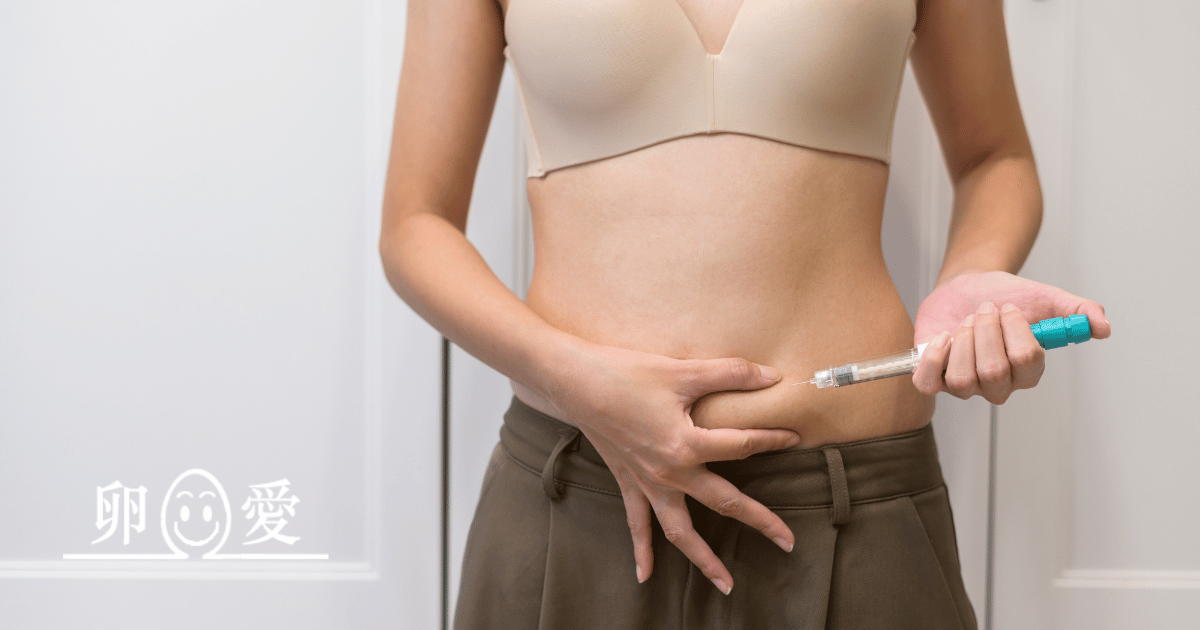




Are you thinking about getting pregnant someday—but not just yet—and considering egg freezing as an option?
As women age, egg quality naturally declines. That’s why many choose to freeze their eggs early—to preserve future fertility options before time takes its toll.
Whether you’re focused on your career, haven’t met the right partner yet, or simply want to protect your fertility from age-related decline, egg freezing gives you more control over your reproductive future. In this article, we’ll walk you through how the process works and why it’s becoming an empowering choice for many women.
At the end, we’ll also honestly discuss the success rates and potential risks of pregnancy using frozen eggs, so you can make an informed and confident decision for yourself.
Table of Contents
What Is Egg Freezing and Why Do It?
Egg freezing, or oocyte cryopreservation, is a procedure where healthy eggs are retrieved from the ovaries and preserved using advanced vitrification technology—a rapid freezing process that stores eggs at –196°C in liquid nitrogen.
At this ultra-low temperature, the eggs’ biological activity nearly stops, preventing aging and maintaining their fertility potential.
Give Your Future Self a Chance at Motherhood
If you’re not ready for pregnancy now—or plan to pursue fertility treatment abroad—freezing your eggs early can make all the difference.
For instance, if you’re considering using a U.S. sperm bank for future matching, the entire process—from finding a match to treatment—can take time. If you wait until you’re ready to conceive, your egg quality may already have declined, making pregnancy more difficult.
By freezing eggs early, you’re keeping the door open. When you’re younger and your egg quality is better, it’s the ideal time to store them for later use—whether that’s IVF abroad, sperm matching, or even surrogacy. Early preparation gives you flexibility and peace of mind.
Who Should Consider Egg Freezing?
Can Unmarried Women Get Government Subsidies?
Egg freezing is an important way to preserve fertility, but it’s not suitable for everyone. Beyond age, certain medical or personal circumstances make some women better candidates. Here’s what you should know:
Ideal Candidates for Egg Freezing:
In general, any woman with future family-planning goals may consider egg freezing, but the following groups are especially encouraged to evaluate this option more proactively:
- Women aged 30–35 (married or planning pregnancy soon):
This age range offers higher egg quality and better success rates. After 35, both egg quality and quantity start to decline significantly. - Women undergoing fertility-threatening treatments:
If you’ll be receiving chemotherapy, radiation, or treatments that could damage ovarian function, freezing eggs beforehand helps preserve your fertility options. - Single women not yet ready to start a family:
Freezing eggs lets you make reproductive choices later in life when you feel more stable—emotionally or financially. - Women with a family history of early menopause (POI):
Early egg freezing can help preserve viable eggs before ovarian function declines. - Women with high stress or irregular lifestyles:
Chronic stress and poor sleep can affect egg quality; freezing eggs early is a proactive choice. - Same-sex couples or women planning overseas fertility treatments:
Under Taiwan’s current Assisted Reproduction Act, unmarried women and same-sex couples face strict limitations on domestic IVF options. Freezing eggs for future use in overseas fertility or surrogacy programs provides a practical solution.
The golden age for egg freezing is before 35, and ideally not later than 40. As you age, both the quantity and quality of your eggs decline, which can lower fertilization and pregnancy success rates after thawing.

Egg Freezing Subsidies in Taiwan: Government Support for Your Fertility Plan
Worried about the cost of egg freezing? Good news — several local governments in Taiwan now offer financial subsidies to help women preserve their fertility.
However, eligibility requirements and subsidy amounts vary by city or county. Here’s a clear summary to help you check whether you qualify.
Cities Offering Subsidies (No Marital or Medical Restrictions)
Taoyuan City
- Age: 25–40 years old
- Residency: Applicant or spouse must be registered in Taoyuan City
- Subsidy Details:
- Egg freezing procedure subsidy: NT$20,000
- Storage fee: NT$6,000 per year (up to 2 years)
- AMH blood test subsidy: NT$1,000
- Maximum total subsidy: NT$33,000
- How to apply: Must undergo treatment at a Taoyuan City–contracted fertility clinic, which will apply on your behalf.
Hsinchu City
- Age: 25–40 years old
- Residency: Registered in Hsinchu City for at least 1 year, or new immigrant spouse of a Hsinchu City resident
- 補助內容:
- AMH test: NT$1,000 per year
- Egg freezing treatment: Up to NT$20,000
- Storage fee: NT$2,000 per year (up to 5 years)
- Maximum total subsidy: NT$33,000
- How to apply: Apply in advance for approval and bring the permit to a contracted medical facility for treatment.
Yunlin County
- Age: 25–40 years old, unmarried women only
- Residency: Registered in Yunlin County for at least 6 months
- Subsidy Details:
- Ovarian Health Assessment (AMH Test)
- Ovulation medication and egg retrieval surgery
- Maximum total subsidy: NT$30,000
- How to apply: Prepare required documents and submit your application to the Yunlin County Government.
Cities Offering Medical Egg Freezing Subsidies Only
(For cancer patients or those undergoing treatments affecting fertility)
Taipei City
- Eligibility: Women under 40 diagnosed with cancer whose fertility may be affected by treatment
- Residency: Registered in Taipei City
- Subsidy Details:
- Egg freezing procedure: NT$20,000
- Storage fee: NT$3,000 per year (up to 4 years)
- Maximum total subsidy: NT$32,000
- How to apply: Must apply within 6 months after completing the procedure.
Taichung City
- Eligibility: Women under 45 diagnosed with cancer whose fertility may be affected
- Residency: Applicant or spouse registered in Taichung City for at least 6 months
- Subsidy Details:
Egg freezing procedure: Up to NT$50,000 - How to apply: Submit required documents after completing treatment.
Tainan City
- Eligibility: Women under 40 diagnosed with cancer whose fertility may be affected
- Residency: Applicant or spouse registered in Tainan City for at least 6 months
- Subsidy Details:
Egg freezing procedure: Up to NT$20,000 (includes AMH blood test) - How to apply: Submit required documents to the Tainan City Health Bureau after completing treatment.
If you’re unmarried, healthy, and simply wish to preserve your fertility, subsidies are currently available in Taoyuan City, Hsinchu City, and Yunlin County.
Check your household registration and age eligibility before applying.
Because the application process and required documents may differ by city, it’s best to contact your local health bureau or a participating fertility clinic directly for the most accurate and up-to-date information.
How Does the Egg Freezing Process Work?
How Can You Get Pregnant After Freezing Your Eggs?
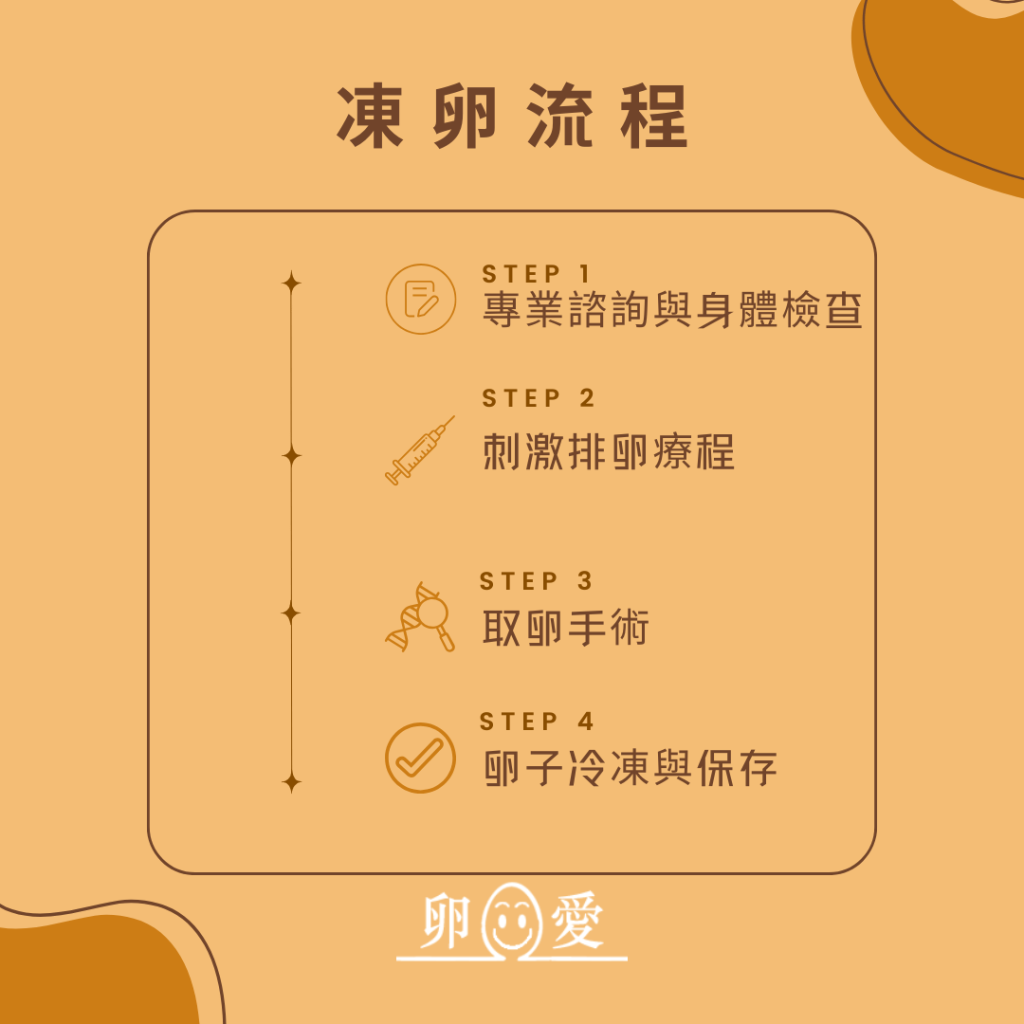
From the first consultation to the final freezing stage, every step of the egg freezing process is important. Here’s a detailed overview of what to expect:
Step 1: Consultation and Medical Evaluation
The journey begins with an in-depth consultation. You’ll meet with a fertility specialist to discuss your reproductive goals, family medical history, and lifestyle. The doctor will assess your ovarian function and explain the benefits and limitations of egg freezing. Then, several medical tests will be arranged to tailor a personalized plan for you:
- AMH Test (Anti-Müllerian Hormone): Measures your ovarian reserve—an important indicator of egg freezing success.
- FSH Test (Follicle-Stimulating Hormone): Reflects ovarian health and egg-producing potential.
- Ultrasound Examination: Allows the doctor to view the number of follicles in your ovaries and assess uterine condition.
Infectious Disease Screening: Ensures there are no conditions that could interfere with the egg freezing process.
Step 2: Ovarian Stimulation
Once your body is cleared for treatment, the next step is ovarian stimulation. The goal is to help your ovaries produce multiple mature eggs in one cycle, rather than just one as in a natural cycle.
Your doctor will design a stimulation protocol based on your hormone levels and ovarian response.
Two main stimulation methods are used:
- Oral Medication: A gentler approach, though results may be less pronounced.
- Injection (Fertility Shots): More effective but requires self-administration or in-clinic injections.
During stimulation, you’ll have follow-up appointments every 2–3 days for ultrasounds and blood tests to monitor follicle growth and hormone changes.
This stage usually lasts 10–14 days, and mild bloating, fatigue, or mood swings may occur — all normal and temporary effects.
第三步:取卵手術
When the follicles reach maturity (about 18–22 mm), your doctor will schedule the egg retrieval procedure. You’ll first receive a trigger shot (HCG or Lupron) to finalize egg maturation. Retrieval is performed approximately 36 hours after the trigger.
The procedure is done under light sedation to minimize discomfort. Guided by ultrasound, the doctor inserts a fine needle through the vaginal wall to collect the eggs from the ovaries.
The process takes about 15–30 minutes and does not require hospitalization. You can go home the same day.
After the procedure, you may experience mild abdominal pain, spotting, or bloating for 1–2 days. Your doctor may prescribe pain relief or anti-inflammatory medication as needed. It’s best to rest, avoid strenuous activity, and follow all post-care instructions carefully.
Step 4: Egg Freezing and Storage
Immediately after retrieval, the eggs are sent to the embryology lab for assessment. Embryologists will examine egg maturity and quality, selecting the best ones for freezing.
The eggs are preserved using the vitrification method, an advanced rapid-freezing technique that cools them to –196°C in liquid nitrogen, minimizing ice crystal formation and significantly improving survival rates.
Frozen eggs are stored in specialized liquid nitrogen tanks and can theoretically remain preserved indefinitely without aging or deterioration.
You’ll typically be charged an annual storage fee, and it’s important to maintain communication with the clinic to confirm the eggs’ storage status.
When You’re Ready to Get Pregnant: Thawing and Fertilization
When the time comes to use your frozen eggs, the clinic will thaw them and perform in vitro fertilization (IVF). The overall process includes:
- Egg Thawing: The frozen eggs are carefully warmed and rehydrated.
- 體外受精:將解凍後的卵子與精子在實驗室中結合,使其受精。
- Embryo Culture: The fertilized eggs develop into embryos over several days
- Embryo Transfer: Healthy embryos are selected and transferred into the uterus.
- 妊娠追蹤:進行妊娠測試和後續的孕期追蹤。
Egg Freezing Costs: What Expenses Are Involved from Testing to Storage?
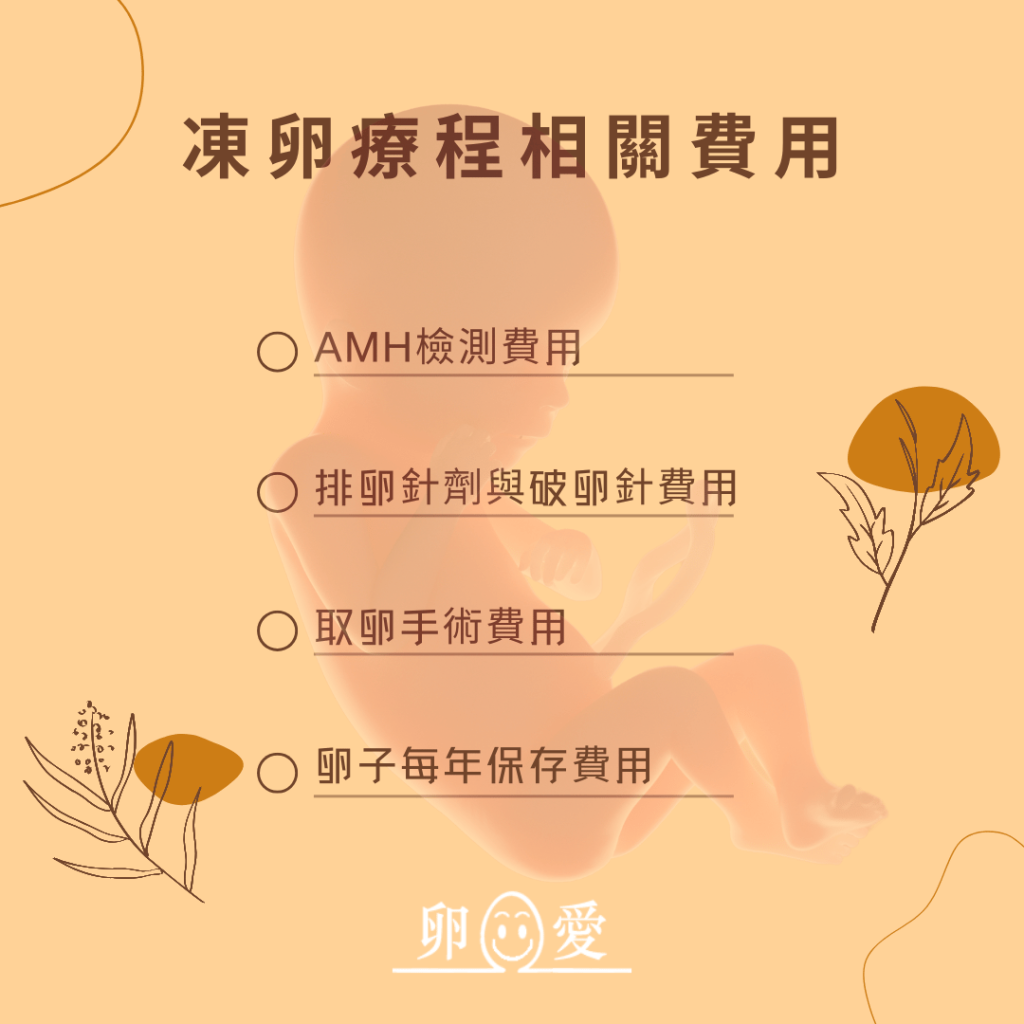
In Taiwan, the total cost of egg freezing generally includes two parts: a one-time treatment fee and an annual storage fee.
One-Time Treatment Fee
This covers everything from the initial consultation and ovarian stimulation to egg retrieval and freezing.
Depending on the medical facility and individual conditions, the cost typically ranges from NT$90,000 to NT$200,000.
1. Pre-Treatment Tests and Evaluation
Before starting the egg freezing process, several tests are required to assess ovarian function and overall health:
- AMH檢測:約新台幣800元
- Hormone tests, infectious disease screening, and transvaginal ultrasound: Around NT$3,000–5,000, depending on the clinic.
2. Ovarian Stimulation and Monitoring
After entering the treatment phase, ovulation-stimulating injections and regular checkups are necessary to monitor follicle growth:
Stimulation and trigger injections: Around NT$30,000–50,000, depending on the medication and dosage.
Monitoring visits (blood tests and ultrasounds): Around NT$1,000–2,000 per visit, usually 2–3 visits in total.
3. Egg Retrieval and Freezing
When follicles mature, egg retrieval is performed and the eggs are frozen for preservation:
Egg retrieval surgery (including anesthesia): Around NT$40,000–50,000.
Freezing technique and materials: Typically included in the surgery fee.
Annual Storage Fee
After freezing, eggs are stored in liquid nitrogen tanks.
The annual storage cost is approximately NT$6,000–10,000, depending on the clinic.
Is Egg Freezing Successful? What Are the Risks?
While modern technology has made egg freezing more reliable, success rates and risks vary depending on individual factors.
- Not a 100% guarantee: Egg freezing increases the chance of pregnancy but doesn’t guarantee success. Eggs may fail to survive thawing, fertilization, or embryo development.
- Age and egg count matter: The earlier you freeze, the better. Freezing 10 or more eggs before age 35 provides the best outcomes. After 35, more eggs are usually needed to achieve similar success rates.
- Potential risks: Although egg retrieval is a low-risk procedure, complications like bleeding or infection may occur. Ovulation-stimulating injections can also cause Ovarian Hyperstimulation Syndrome (OHSS) and related side effects.

Risks and Side Effects of Egg Freezing:
Although egg freezing is generally considered a safe procedure, there are still potential risks and side effects to be aware of:
- Ovarian Hyperstimulation Syndrome (OHSS)
- Occurs in approximately 0.5% to 2% of cases.
- 症狀包括腹脹、噁心、嘔吐、體重增加等。
- Most cases are mild and can be managed through observation or outpatient care; severe cases requiring hospitalization are rare.
- Egg Retrieval Surgery Risks
- The egg retrieval procedure is a minimally invasive vaginal surgery, which may cause mild abdominal pain, bleeding, or infection.
- General anesthesia is used during the procedure, so anesthesia-related risks should also be considered.
- Egg Survival After Thawing
- 目前使用玻璃化冷凍技術,卵子解凍後的存活率可達95%以上。
- 解凍後的卵子仍可能因品質下降而影響受精率與胚胎發育。
- Pregnancy-Related Complications
- Using frozen eggs for pregnancy at an advanced maternal age may increase risks such as gestational hypertension, diabetes, or preterm birth.
- It’s generally recommended to complete pregnancy before age 45 to minimize potential complications.