

Introduction
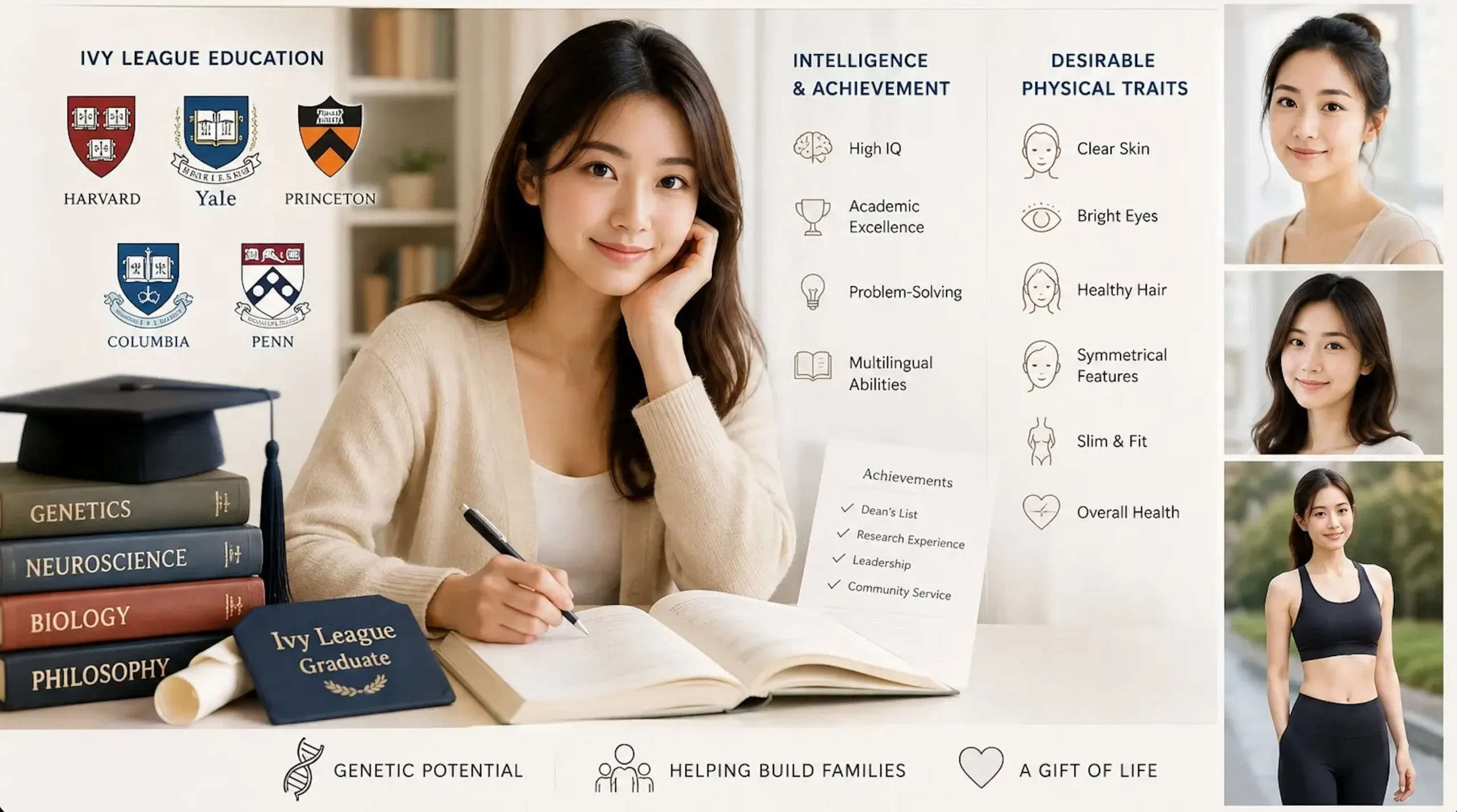
Choosing the right Asian egg donor involves more than reviewing photos or basic medical information. Intended parents may consider a donor’s educational background, intelligence, academic achievements, physical characteristics, family medical history, personality, ethnicity, and resemblance when searching for the best possible match. For families interested in Ivy League Chinese egg donors or a high-education Asian egg donor database, understanding how donor qualifications are evaluated can make the selection process clearer and more informed.
This guide explains how to select an Asian egg donor, including what to consider when reviewing Ivy League or highly educated donors, evaluating academic and personal backgrounds, comparing physical traits, and determining how to choose an egg donor for resemblance. Learn how intended parents can navigate an Asian egg donor database and balance education, health, appearance, ethnicity, and personal preferences when choosing a donor for their family-building journey.
Table of Contents
How to Select an Asian Egg Donor: What Intended Parents Should Consider
Choosing an Asian egg donor is an important and highly personal part of the family-building journey. Intended parents may enter the process with different priorities, from medical and genetic health to ethnicity, education, personality, physical appearance, and family resemblance. Understanding these factors before exploring an Asian egg donor database can make the selection process more focused and manageable.
1.1 Why Choosing an Egg Donor Is Such a Personal Decision
There is no single definition of the “best” egg donor. Every intended parent or family may value different characteristics based on their personal background, family goals, cultural identity, and hopes for their future child.
Some intended parents prioritize finding a donor who shares their Asian ethnicity or cultural background, while others focus more heavily on health history, education, personality, interests, or physical resemblance. For example, Chinese intended parents may prefer a Chinese egg donor whose facial features, height, complexion, or other characteristics resemble members of their family.
The goal is not to find a “perfect” donor, but to identify a donor whose overall profile aligns with the factors that matter most to your family.
1.2 Medical, Genetic, Educational, and Physical Factors to Consider
When learning how to select an Asian egg donor, intended parents should look at the donor’s complete profile rather than focusing on a single characteristic.
Medical and genetic history should generally be among the most important considerations. Egg donor screening may include a review of personal and family medical history, infectious-disease testing, genetic carrier screening, and other evaluations required by the fertility clinic or program.
Educational background can also be important to some families. Intended parents searching a high-education Asian egg donor database may look for donors who attended highly ranked universities, earned advanced degrees, or demonstrated strong academic achievements. Some families specifically search for Ivy League Chinese egg donors, although educational credentials alone cannot predict a future child’s intelligence or academic success.
Physical characteristics may include height, facial features, eye and hair characteristics, complexion, body build, and other observable traits. Intended parents interested in how to choose an egg donor for resemblance may compare these characteristics with their own family traits.
Personality, hobbies, talents, career interests, and personal motivations can provide additional context and help intended parents develop a more complete picture of the donor.
1.3 Creating Priorities Before Searching an Asian Egg Donor Database
Before browsing hundreds of donor profiles, it can be helpful to divide your preferences into must-have criteria and nice-to-have characteristics.
For example, medical eligibility and genetic compatibility may be essential, while a particular university, height range, profession, or facial characteristic may be a preference rather than an absolute requirement.
Intended parents searching for a highly specific combination—such as an Asian egg donor with an Ivy League education, particular ethnicity, specific physical traits, and strong family medical history—should also recognize that a narrower set of criteria can significantly reduce the number of available matches.
Creating clear priorities allows intended parents to search an Asian egg donor database more efficiently while remaining flexible enough to consider excellent donor profiles that may not match every preference.
Ultimately, selecting an Asian egg donor is about balancing medical and genetic considerations with education, ethnicity, physical resemblance, personality, and personal family values to find a donor who feels right for your family-building journey.
💡 Quick Fact
A donor’s Ivy League education or academic achievement does not guarantee that a future child will have the same level of intelligence or academic success. Research shows that intelligence is a complex trait influenced by many genetic factors as well as environment, education, nutrition, healthcare, and upbringing.
Related Video: Why We decided to Choose an Asian Egg Donor
Further Reading: Is Intelligence determined by Genetics

Ivy League Chinese Egg Donors: Why Some Intended Parents Prioritize Education
For some intended parents, education is an important consideration when choosing an Asian egg donor. Academic history may provide insight into a donor’s interests, motivation, accomplishments, and life experiences. As a result, families searching a high-education Asian egg donor database may specifically look for Chinese donors who attended highly selective universities or completed advanced degrees.
2.1 What Intended Parents Mean When Searching for Ivy League Chinese Egg Donors
The term “Ivy League Chinese egg donors” generally refers to Chinese or Chinese-heritage egg donors who have attended one of the eight Ivy League universities in the United States: Brown, Columbia, Cornell, Dartmouth, Harvard, Princeton, the University of Pennsylvania, or Yale.
Intended parents interested in these donors may prioritize characteristics such as:
- Strong academic achievement and educational background
- Admission to a highly selective university
- Undergraduate or graduate-level education
- Professional accomplishments and career goals
- Intellectual interests, talents, and extracurricular achievements
- A combination of Chinese heritage, education, health, and desired physical characteristics
However, Ivy League egg donors represent a highly specific donor profile, so availability may be more limited when intended parents combine education with additional preferences such as ethnicity, height, appearance, blood type, location, or previous egg-donation experience.
2.2 Academic Achievement vs. Inherited Intelligence
It is important to distinguish academic achievement from inherited intelligence. Attending an Ivy League university does not mean that a donor’s future genetic offspring will automatically have the same academic abilities or educational outcomes.
According to the U.S. National Library of Medicine’s MedlinePlus Genetics, intelligence is considered a complex trait influenced by both genetic and environmental factors. Research suggests that many genes contribute to differences in cognitive ability, while factors such as a person’s home environment, education, nutrition, healthcare, learning opportunities, and life experiences can also play important roles.
For this reason, a donor’s education can be considered one part of a much broader profile rather than a guarantee of a child’s future intelligence.
When evaluating an Ivy League or highly educated Chinese egg donor, intended parents may therefore consider academic history alongside medical screening, genetic carrier screening, family health history, physical characteristics, personality, ethnicity, previous donation outcomes, and overall compatibility.
Intended Parents Registration Link: Click Me
If you’re considering egg donation and have any questions about the process feel free to reach out to the【Generation Family Network】 professional team. We’re here to help you understand everything clearly and guide you through each step with confidence and care.
How to Search a High-Education Asian Egg Donor Database
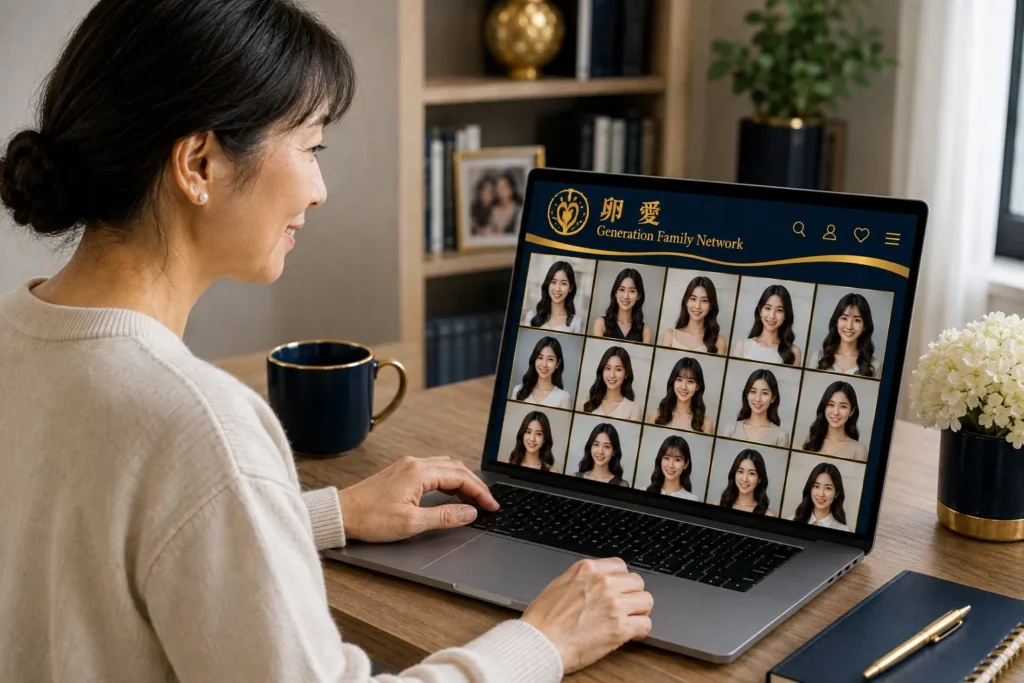
For intended parents who place significant value on education, using a high-education Asian egg donor database can help narrow the search based on academic background alongside medical, genetic, ethnic, and physical characteristics. A well-organized donor profile should provide enough information to help families compare potential donors while remembering that educational achievement does not guarantee a future child’s intelligence or academic performance.
3.1 What Information Should Be Included in a High-Education Asian Egg Donor Database?
A comprehensive Asian egg donor database may include more than photographs and basic demographic information. Depending on the agency and donor consent, profiles may provide details such as:
- Education level and academic background
- College or university attended
- Undergraduate major or field of study
- Graduate or professional degrees
- Current occupation or career field
- Ethnic and cultural background
- Height and other physical characteristics
- Personal and family medical history
- Genetic carrier-screening information, when available
- Personality, interests, hobbies, and talents
- Previous egg donation history and retrieval information, when applicable
For intended parents searching specifically for Ivy League Chinese egg donors or donors from other highly selective universities, educational information can make it easier to identify profiles that align with their preferences.
Medical and genetic suitability, however, should be evaluated with the fertility clinic and appropriate healthcare professionals rather than based solely on information displayed in an online profile.
3.2 Bachelor’s, Master’s, Doctoral, and Professional-Degree Donors
Highly educated Asian egg donors can come from many academic backgrounds. Some may be completing or have earned a bachelor’s degree, while others may hold master’s, doctoral, medical, law, or other professional degrees.
Rather than looking only at the name or ranking of a university, intended parents may find it useful to consider the donor’s broader academic journey. A profile might include her field of study, academic accomplishments, professional interests, languages, extracurricular activities, or long-term career goals.
For example, one family might prioritize a Chinese egg donor with a graduate degree, while another may prefer an Asian donor with a background in STEM, medicine, business, arts, or another field that reflects characteristics valued within their family.
Education can therefore serve as one matching preference among many, alongside health history, genetic compatibility, ethnicity, appearance, personality, and donor availability.
3.3 Why Donor Availability Can Affect Matching Timelines
The more specific the search criteria become, the smaller the potential donor pool may be.
An intended parent searching broadly for an Asian egg donor may have many profiles to consider. However, combining requirements such as Chinese ethnicity, Ivy League education, a graduate degree, a specific height range, particular physical features, genetic compatibility, and immediate availability can significantly narrow the number of potential matches.
Even after finding a preferred donor, she may need to complete or update medical and genetic screening, receive fertility-clinic approval, coordinate legal agreements, and schedule the donation cycle around her personal, academic, or professional commitments.
For intended parents using a high-education Asian egg donor database, identifying which characteristics are essential and which are flexible can help create a more realistic and efficient matching strategy.
Ultimately, the goal is not simply to find the donor with the highest educational credential. It is to identify a donor whose health, background, availability, and personal characteristics collectively align with the intended parents’ family-building priorities.
Intelligence and Egg Donation: What Can—and Cannot—Be Predicted
For intended parents searching for a high-education Asian egg donor or Ivy League Chinese egg donor, intelligence may naturally become part of the conversation. However, educational achievement and cognitive ability are complex characteristics, and neither can be predicted with certainty from an egg donor’s university, degree, occupation, or test scores.
Understanding what genetics can—and cannot—tell us can help intended parents evaluate donor profiles more realistically while keeping medical and genetic health at the center of the selection process.
4.1 Is Intelligence Genetic?
Yes, genetics plays a role in intelligence, but there is no single “intelligence gene” that determines how intelligent a person will become.
According to MedlinePlus Genetics, intelligence is considered a complex trait influenced by both genetic and environmental factors. Researchers believe many genes contribute to cognitive abilities, with each individual genetic variant generally having only a small effect.
This means choosing an egg donor with an Ivy League education, advanced degree, or exceptional academic record cannot guarantee that a future child will inherit the same level of intelligence or academic achievement.
A donor’s educational history can still provide useful information about her individual accomplishments, interests, motivation, and experiences, but it should not be treated as a genetic prediction.
4.2 Genetics Versus Environment in Cognitive Development
A child’s cognitive development results from a complicated interaction between genetic influences and environmental experiences.
Genetic inheritance can contribute to differences in cognitive abilities, but environmental influences—including education, nutrition, family environment, healthcare, learning opportunities, socioeconomic circumstances, and life experiences—can also affect development.
This distinction is particularly important when intended parents are comparing highly educated Asian egg donors. Two donors with similar educational backgrounds may have very different genetic, family, environmental, and personal histories.
Likewise, selecting a donor from a prestigious university does not determine where a future child will study or what profession they will pursue.
For this reason, education is better viewed as one component of a complete donor profile, rather than a measurable guarantee of inherited intelligence.
4.3 Medical and Genetic Screening Should Come Before Academic Prestige
While academic background can be an important personal preference, medical and genetic screening should be a foundational part of egg donor evaluation.
The American Society for Reproductive Medicine (ASRM) provides guidance for the evaluation of gamete donors, including considerations related to medical history, infectious-disease screening, genetic risk assessment, and family history.
When comparing donors, intended parents should work with their fertility clinic and qualified healthcare professionals to determine whether a donor is medically appropriate for their treatment rather than making a decision based primarily on university ranking or educational credentials.
Related Reading:ASRM — Guidance Regarding Gamete and Embryo Donation
4.4 Reviewing Personal and Family Medical History
A detailed personal and family medical history can help healthcare professionals identify potential hereditary risks that may require additional evaluation.
Depending on the clinic and donor program, the assessment may consider the donor’s own health history as well as conditions occurring among biological relatives. Genetic carrier screening may also be recommended or required to evaluate whether a donor carries variants associated with certain inherited conditions.
This information becomes especially important when combined with the genetic information of the sperm source. If both genetic contributors carry variants associated with the same recessive condition, a genetic counselor or fertility specialist can help intended parents understand the potential reproductive implications.
Therefore, when learning how to select an Asian egg donor, intended parents may want to establish their priorities in this order: medical eligibility and genetic considerations first, followed by personal matching preferences such as ethnicity, education, physical resemblance, personality, and other desired characteristics.
An impressive academic background can make a donor profile attractive, but a successful donor match ultimately requires a much broader assessment than academic prestige alone.

Creating Your Asian Egg Donor Selection Checklist
Choosing an Asian egg donor can feel overwhelming when a database contains many profiles with different medical histories, ethnic backgrounds, physical characteristics, educational achievements, and compensation expectations. Creating an egg donor selection checklist before beginning your search can help you separate essential requirements from personal preferences and compare potential donors more consistently.
The priorities below provide a practical starting point. Every family is different, so intended parents should discuss medical and genetic considerations with their fertility clinic and qualified healthcare professionals.
5.1 Priority 1: Medical and Genetic Suitability
Medical and genetic considerations should form the foundation of the donor-selection process. A donor who appears to match your preferred education, ethnicity, or physical characteristics must still meet the medical requirements established by the fertility clinic.
Depending on the program and clinic, evaluation may include:
- Personal medical and reproductive history
- Family medical history
- Genetic carrier screening
- Infectious-disease screening
- Fertility and ovarian-reserve evaluation
- Psychological evaluation when required
- Review of previous donation cycles, if applicable
- Final approval from the fertility clinic
Genetic results should also be evaluated in relation to the sperm source when appropriate. A fertility specialist or genetic counselor can help intended parents understand whether additional testing is recommended.
5.2 Priority 2: Ethnic or Cultural Background
For many families searching an Asian egg donor database, ethnicity and cultural heritage are meaningful matching considerations.
Intended parents may look for donors with Chinese, Taiwanese, Korean, Japanese, Vietnamese, Filipino, or other Asian backgrounds. Some families seek a donor who closely matches their own ancestry, while others may prioritize a broader shared cultural background.
When ethnicity is particularly important, consider whether you are looking for a specific ancestry or whether a broader Asian background would also meet your family’s preferences. Being clear about this distinction can expand or narrow the available donor pool considerably.
5.3 Priority 3: Physical Resemblance
How to choose an egg donor for resemblance is another common question among intended parents. Some families hope to find a donor whose physical characteristics resemble the intended mother, intended father, or other family members.
Characteristics commonly considered may include:
- Height and body build
- Facial features and face shape
- Eye characteristics
- Hair color and texture
- Skin tone or complexion
- Overall resemblance to the intended parents or family
Physical characteristics are inherited through complex combinations of genes. Selecting a donor with certain features therefore cannot guarantee that a future child will have those same traits.
Rather than searching for an exact physical match, intended parents may find it more practical to identify several characteristics that are especially meaningful to them.
5.4 Priority 4: Education and Academic Achievement
Education can be an important preference for families using a high-education Asian egg donor database.
Profiles may include donors who are currently studying for or have completed bachelor’s, master’s, doctoral, medical, law, or other professional degrees. Some intended parents may specifically search for Ivy League Chinese egg donors or donors from other highly selective universities.
Consider:
- Highest level of education
- College or university attended
- Major or field of study
- Graduate or professional degrees
- Academic accomplishments
- Career and professional background
- Talents, interests, and extracurricular achievements
However, educational achievement should not be interpreted as a guarantee of inherited intelligence. Intelligence and academic performance are complex traits influenced by both genetic and environmental factors.
For this reason, education is best considered as part of the donor’s overall background rather than as a predictor of a future child’s academic success.
5.5 Priority 5: Availability, Location, and Budget
A donor may match nearly every preferred characteristic but still be difficult to proceed with if her availability, location, or expected costs do not fit the intended parents’ treatment plan.
Before making a final selection, consider:
- Is the donor currently available?
- Has she donated previously?
- Is she willing and able to travel to the selected fertility clinic?
- How quickly can medical screening begin?
- Does her schedule align with the anticipated treatment timeline?
- What is the donor’s compensation?
- Will travel and accommodation be required?
- Are there additional agency, legal, insurance, monitoring, medication, or clinic expenses?
Highly specific searches—such as finding an Ivy League Chinese egg donor with particular physical traits and immediate availability—can result in a much smaller donor pool and potentially a longer matching timeline.

Frequently Ask Questions
Q1: How do I choose an egg donor who resembles me?
A1: If physical resemblance is important to you, start by identifying the traits that matter most, such as ethnic background, height, face shape, eye characteristics, hair texture, complexion, and overall appearance. An Asian egg donor database may allow intended parents to compare these characteristics through donor profiles and photographs.
Keep in mind that physical traits are influenced by many genes inherited from both genetic contributors. Choosing an egg donor who resembles you may increase the possibility of shared characteristics, but it cannot guarantee that your future child will look like you or the donor.
Q2: Can I find Ivy League Chinese egg donors?
A2: Yes, it is possible to find Ivy League Chinese egg donors, although this is a highly specific donor category and availability may be limited.
Intended parents searching for this type of donor may look for Chinese or Chinese-heritage donors who have attended Harvard, Yale, Princeton, Columbia, Cornell, Brown, Dartmouth, or the University of Pennsylvania.
Adding additional requirements—such as a particular height, appearance, graduate degree, blood type, location, or previous donation experience—can further narrow the available donor pool. Working with an egg donor agency can help families identify potentially suitable profiles based on their highest-priority criteria.
Q3: How can I find a high-education Asian egg donor database?
A3: Look for an Asian egg donor database that provides detailed educational information rather than simply listing whether a donor attended college.
Useful profiles may include the donor’s highest degree, university, major, graduate education, professional qualifications, occupation, academic accomplishments, and other interests or talents.
Intended parents searching for highly educated donors can also work with an agency such as Generation Family Network to narrow potential matches based on education together with ethnicity, medical suitability, physical characteristics, availability, and other preferences
Q4: Does an egg donor's education predict a child's intelligence?
A4: No. A donor’s educational achievement cannot reliably predict a future child’s intelligence or academic success.
Intelligence is a complex trait influenced by both genetics and environmental factors. Many genetic variants are believed to contribute to cognitive abilities, while education, nutrition, family environment, healthcare, learning opportunities, and other experiences can also influence cognitive development.
An Ivy League education or advanced degree can tell intended parents about the donor’s individual achievements and educational background, but it should not be treated as a guarantee of inherited intelligence.
Further Reading: MedlinePlus Genetics — Is intelligence determined by genetics?
Q5: Should I prioritize education, appearance, or medical history?
A5: Medical and genetic suitability should generally be addressed before preferences such as education or appearance.
Professional guidance for gamete donation emphasizes appropriate medical evaluation, family medical history, infectious-disease screening, and genetic risk assessment. Intended parents can then consider personal preferences such as Asian ethnicity, cultural background, physical resemblance, education, personality, talents, and interests when comparing medically appropriate candidates.
Q6: Are proven egg donors better than first-time donors?
A6: Not necessarily. A proven egg donor—meaning someone who has completed a previous donation cycle—may provide additional information about how she previously responded to ovarian stimulation, such as the number of eggs retrieved and, when available, maturity or subsequent laboratory outcomes.
However, previous results do not guarantee the outcome of a future cycle. Response can vary between cycles, and egg quantity alone does not determine embryo development or pregnancy success.
A first-time donor can also be an excellent candidate when she successfully completes the required medical, genetic, and other screening.
Instead of automatically choosing a repeat donor over a first-time donor, intended parents should review the complete donor profile and fertility-clinic evaluation, including age, health history, genetic screening, ovarian assessment, and previous cycle information when available.

How Generation Family Network Helps Intended Parents Find Asian Egg Donors
Finding the right Asian egg donor often involves balancing several priorities, including medical suitability, ethnicity, physical characteristics, education, personality, availability, location, and budget. Generation Family Network (GFN) helps intended parents navigate this process by providing access to Asian egg donor profiles and personalized matching support based on each family’s preferences and treatment plans.
Rather than focusing on a single characteristic—such as appearance or academic prestige—GFN helps intended parents consider the donor’s overall profile and coordinate the next steps with the fertility professionals involved in their journey.
7.1 Accessing a Diverse Asian Egg Donor Database
Generation Family Network’s Asian egg donor database allows intended parents to explore donors from a variety of Asian backgrounds and review characteristics that may be important to their search.
Depending on the individual donor profile and available information, intended parents may be able to consider factors such as:
- Ethnic and cultural background
- Age, height, and physical characteristics
- Educational background and degree level
- University, major, and professional interests
- Personal and family medical history
- Genetic screening information, when available
- Personality, hobbies, talents, and interests
- Previous egg donation experience, when applicable
- Current location and willingness to travel
- Donor availability and compensation expectations
For families searching for a high-education Asian egg donor, GFN can also help identify profiles that more closely match specific academic preferences, including donors with bachelor’s, master’s, doctoral, or professional-degree backgrounds.
Because donor availability changes, intended parents with highly specific requirements—such as ethnicity, education, height, appearance, and location—may benefit from discussing which criteria are essential and where they are comfortable being flexible.
7.2 Personalized Donor Matching Based on Intended-Parent Preferences
Every intended parent’s search is different. Instead of expecting families to navigate donor profiles without guidance, Generation Family Network can help narrow potential matches according to the characteristics that matter most to them.
The matching process may begin by identifying must-have requirements and preferred characteristics. For example, intended parents might prioritize medical and genetic suitability first, followed by Chinese or another Asian heritage, physical resemblance, educational background, donor experience, location, availability, and budget.
For families searching for highly specific profiles—such as Ivy League Chinese egg donors or donors with advanced academic backgrounds—personalized matching can help identify potentially suitable candidates without making academic achievement the sole basis for selection.
Once a potential donor has been identified, GFN can also help facilitate communication and coordination among the intended parents, donor, fertility clinic, and other professionals involved in the egg donation journey.
The goal is to make the search for an Asian egg donor more organized, transparent, and personalized while helping intended parents find a donor whose overall profile aligns with their family-building priorities.
7.3 Secure Escrow Protection
Financial transparency is an important part of every egg donation journey.
Where applicable, intended-parent funds may be managed through an independent escrow provider. Payments are released according to agreed contractual milestones rather than being transferred directly without oversight.
Escrow protection can help provide:
- Clear payment schedules
- Transparent fund management
- Documented expense releases
- Greater financial security
- Reduced risk for intended parents and donors
The exact escrow structure depends on the destination, clinic, legal agreement, and services selected.
7.4 Personalized Matching for Chinese Intended Parents
Every family has different preferences, medical needs, timelines, and budgets. Our matching process is personalized rather than one-size-fits-all.
We help Chinese intended parents consider factors such as:
- Donor ethnicity and family background
- Education and personal characteristics
- Previous donation experience
- Egg retrieval history
- Genetic-screening results
- Treatment destination
- Donor availability
- Budget and legal requirements
Once intended parents select their initial preferred donors, we can provide additional available information and help coordinate the next steps.
7.5 Schedule a Free Consultation
Starting an international egg donation journey can feel overwhelming, but you do not have to manage every step alone.
Schedule a free consultation with Generation Family Network to discuss:
- Your preferred treatment country
- Egg donor availability
- Estimated costs
- Medical and legal requirements
- Treatment timelines
- International travel considerations
Our team will help you understand your available options and create a clearer path toward building your family.
💬 Message Generation Family Network today for personalized guidance and answers to your fertility questions. We’re here to support you every step of your family-building journey.
If you’re considering egg donation and have any questions about the process feel free to reach out to the【Generation Family Network】 professional team. We’re here to help you understand everything clearly and guide you through each step with confidence and care.